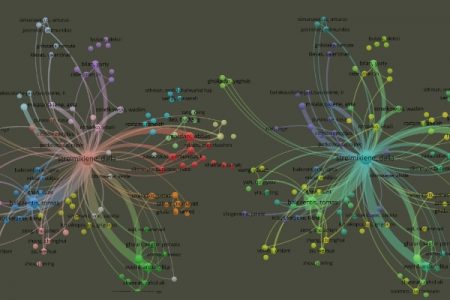
Knowledge integration for societal challenges: from interdisciplinarity to research portfolio analysis For research to address societal challenges, indicators of average degree of ‘interdisciplinarity’ are not relevant. Instead, we propose a portfolio approach to analyze knowledge integration as a systemic process; in particular, the directions, diversity and synergies of research trajectories. Ismael Rafols • December 01, 2020
On 'measuring' interdisciplinarity: from indicators to indicating Indicators of interdisciplinarity are increasingly requested. Yet efforts to make aggregate indicators have failed due to the diversity and ambiguity of understandings of interdisciplinarity. Instead of universal indicators, we propose a contextualised process of indicating interdisciplinarity. Ismael Rafols • November 30, 2020 • 3 comments
Is there a typical journal article in the field of science and technology studies? An intermediary report from an ongoing research project to study the co-evolution of publishing practices and intellectual debates in the field of science and technology studies. Maria Amuchastegui, Wolfgang Kaltenbrunner and Kean Birch • November 25, 2020
The unintended consequences of task specialization in research careers Researchers collaborate specializing in specific tasks. However, the research evaluation system only rewards specific profiles of researchers, threatening the diversity of the science ecosystem. Nicolás Robinson-García, Rodrigo Costas, Cassidy R. Sugimoto, Vincent Larivière and Tina Nane • November 23, 2020
How important are bibliometrics in academic recruitment processes? In a newly published paper in Minerva I have analyzed confidential reports from professor recruitments in four disciplines at the University of Oslo. In the paper I show how bibliometrics are used as a screening tool and not as a replacement for more traditional qualitative evaluation of candidates. Ingvild Reymert • November 20, 2020
Do not assess books by their publishers In my PhD research, I investigate the practicalities of the evaluation of scholarly book outputs across countries. In this blog post, I discuss the inconsistencies I discovered in judgements about publishers. I also propose a model for future evaluation of scholarly books. Eleonora Dagiene • November 18, 2020
How can we organise team building and brainstorming online in times of corona? The CWTS solution to this question: organise an online retreat. Last year, CWTS organised its research retreat off-site in Noord-Brabant. This year, due to the pandemic, we organised an alternative. This even brought us to Thailand - virtually, of course. In this post, we share our experiences. Josephine Bergmans, Inge van der Weijden and Jackie Ashkin • November 16, 2020
Evaluative Inquiry IV: Accountability and learning Do research evaluations serve the purpose of accountability or of learning? We argue that they can do both and that we might as well use the energy and resources it takes to organize evaluations for both accountability and learning opportunities. Tjitske Holtrop, Laurens Hessels and Ad Prins • November 05, 2020
Leiden Madtrics turns one today! Leiden Madtrics has been around for a full year! Time to reflect and wonder: How did it go? Blog team • October 31, 2020