



Resilience in times of crisis: Strengthening Open Science against geopolitical pressures
How can open science be resilient in the face of geopolitical pressures? Drawing on findings from a recent workshop, we suggest four discussion points that need further consideration as funding agencies, policymakers, and institutions work towards resilience.
The success of the Open Science movement relies on research products and infrastructures being open, accessible and sustainably curated. Recent global events, ranging from the defunding of research infrastructure in the United States to wartime threats in Ukraine, demonstrate the vulnerability of open science to geopolitical forces and demand the development of responsive and resilient open systems.
To work toward this goal, we convened a workshop funded by Open Science Netherlands in November 2025. The workshop brought together international researchers, practitioners, infrastructure providers and leaders from professional societies to discuss the influence of geopolitics on the adoption and sustainability of Open Science and to brainstorm potential forms of resilience. This blogpost describes the key findings of the workshop, which have informed the development of a position statement targeted at UNESCO. These findings can also be used as a tool to enable future conversations with other actors, such as institutions or funding agencies, who play critical roles in working towards resilience.
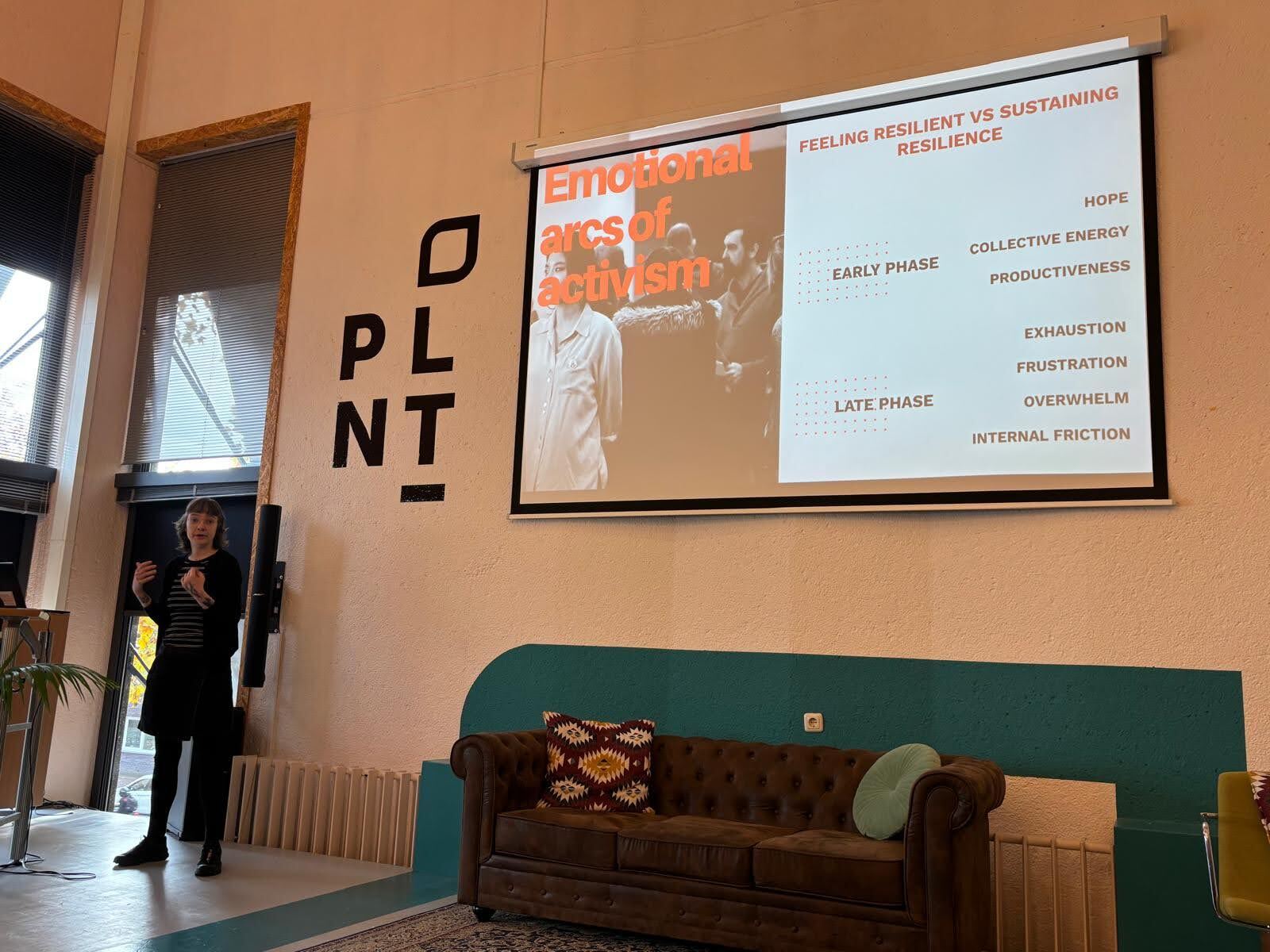
An interactive, bottom-up workshop exploring the resilience of Open Science
The workshop design was highly interactive and driven by participants’ experiences and concerns. Two weeks prior to the workshop, participants were invited to contribute position statements outlining key issues or points for discussion related to geopolitical pressures and core aspects of Open Science in the UNESCO Recommendation on Open Science. These aspects include: open scientific knowledge (e.g. data, papers, software, hardware and educational resources), open scientific infrastructures, open engagement with societal actors and open dialogue with other knowledge systems. The position statements, some of which will be published in a special collection on the MetaROR platform, informed the development of the workshop program and provided context for our discussions.
The morning session of the workshop consisted of a keynote talk from Lynda Kellam, one of the core steering members of the Data Rescue Project, and several invited impetus presentations in which speakers were asked to highlight three key issues which need further consideration. Based on these talks, participants mapped out known influences of geopolitics on Open Science, topics where we still need more evidence and awareness, and potential “unknown unknowns” which might occur. The afternoon breakout sessions were dedicated to two rounds of small group discussion to further identify threats, including to the values underlying Open Science, and tensions and strategies in working towards resilience. The day ended with a discussion on how to further develop a group position statement to stimulate awareness and action within UNESCO on this issue.
Four discussion points to take forward
Drawing on findings from the individual position statements, presentations, and various workshopping methods, we identify four points which can be used to further stimulate discussions with various actors, including policymakers, institutions and funders.
1. Human infrastructure and social networks are a key (if underfunded) tool for resilience.
Human infrastructure – the networks of people who develop, maintain, and curate open content and systems – is needed in the best of times. These people perform the critical, but often invisible, work that keeps open content available and supporting infrastructures functional. While some of this work is funded by institutions, governments, or libraries, much of it consists of volunteer labour. Data rescue efforts discussed in the workshop are but one instance of the many volunteer working groups and task forces underlying open science efforts more broadly.
We argue that these forms of human infrastructure need to be systematically and stably funded and sustained. How to do so specifically deserves much more thought and consideration, in part because of difficulties in communicating the value of this invisible work to both funders and the general public, who have sway in determining how public funds are spent. Sustaining the (volunteer) human infrastructure of Open Science involves more than just identifying new funding streams. We also need to think about how to sustain the workers and communities themselves. Volunteer labour, such as that involved in rescuing data in times of crisis, can be rewarding but also emotionally draining and full of uncertainties, demanding considered mechanisms for community support.
Personal and professional relationships between various actors are themselves vital tools for resilience. Successful data rescue efforts, for example, have been rooted in existing and new professional networks. Working together to achieve shared goals engenders feelings of trust within a community. An open question for consideration is to think about how these trusted networks can scale and be quickly mobilized in times of crisis. One idea which emerged from the workshop was to draw on analyses of scientific collaborations to identify potential networks of collaborators who could help each other in emergencies, e.g. by backing up open content or supporting the mobility of scholars from threatened locations.
2. Resilience can be facilitated through redundancy and considered infrastructural relationships.
Rooted in the concept of “lots of copies keeping stuff safe,” it is necessary to have multiple copies of content in geographically distributed locations connected through federated technologies. This is important in order to avoid becoming reliant on a single system in a single country, which can introduce a single point of failure. While this is not a new concept, there are sociotechnical and legal challenges to doing so. As discussed in the workshop, legal restrictions limit where back-up content can be stored, and redundancy is often not planned with the idea that government infrastructures are at risk.
This points to a need to carefully consider the relationships between infrastructures as we plan for redundancy. Existing infrastructural relationships can provide agile solutions in crises, as demonstrated by the creation and use of the DataLumos repository (operated by ICPSR) to archive rescued data. Sometimes hidden relationships between infrastructures exist, however, which have implications for resilience. One example discussed in the workshop was the reliance of many open infrastructures on proprietary infrastructures and commercial providers, such as Amazon or Google. The increasing reliance on BigTech companies was seen by many to be a potential threat to Open Science, with calls to “move beyond the AWS bucket” to help to navigate vulnerabilities. At the same time, others pointed out that there could be something to be learned from such organizations in terms of their financial models or usability of their systems. Balancing the tensions involved in relationships with commercial providers is core to thinking about sustainability and resilience.
3. Plan in times of feast as well as famine: “Anticipatory maintenance” is needed.
It is not enough to plan for (and fund) resilience and sustainability efforts in times of crisis. Strategic planning for what to do in times of threat, as well as how to make open science and its infrastructures last over time, needs to be built into regular workflows and funding mechanisms. This type of “anticipatory maintenance” is situational and ongoing, rather than something which is fixed. It requires that Open Science infrastructures play the long game and continually think about how to justify investments in maintenance and resilience in non-crisis times.
Strategic planning requires a knowledge of potential threats to understand what we are being resilient against and which objects may be at risk, be those data, communities, or research pipelines. These objects are often inter-related; when one is attacked, it has carry-on effects for others. As discussed in the workshop, when an organization is completely de-funded, as has been done recently in the United States, essential data may not be collected in the first place, or the staff who normally maintain an infrastructure or curate data may be fired. This impacts the resilience of the organization, communities, data, and the broader research landscape. Sometimes the threats to various objects are obscured or are not as straightforward as they may seem. One example is the often-discussed threat of federal data disappearing. It is rare that these data are actually completely deleted; it is much more common that their access mechanisms, e.g. a tool or an existing URL, become unavailable. This requires thinking about not only how to sustain data and other open content, but also their access points and related tools.
4. The international nature of Open Science (and research) requires international policy, funding, and strategic planning.
Much of research relies on international collaborations, from large-scale projects collecting data about climate patterns to smaller projects connecting researchers and ideas from different parts of the world. One of the biggest geopolitical threats identified in the workshop was the threat of “slowbalization” instead of globalization. Rather than encouraging global connections and cooperation, geopolitical pressures could limit or slow down collaborations and restrict the flow of data and knowledge. Rather than encouraging “opening up” these pressures could effectively stimulate “closing down,” where national priorities and interests supersede those of research as a whole. One way to counter this threat could be to develop more international modes of funding research, which is often done at a national level, and to work across borders to develop plans for safeguarding international collaborations.
We see these four points as key issues that need further discussion and action. By posing them here, we hope to stimulate broader engagement with this topic amongst funders, institutions, and policymakers.
We thank all of the workshop participants for their efforts and contributions and are grateful to Open Science Netherlands (OSNL) for funding this workshop.
Photo by Dallas Penner on Unsplash
DOI: 10.59350/4xak5-2s443
(export/download/cite this blog post)
0 Comments
Add a comment