

Engaging with societal challenges through diverse knowledge systems

How can we foster diverse and inclusive knowledge systems that genuinely engage with societal needs and challenges? This question lies at the heart of the new strategy of the CWTS Focal Area Engagement & Inclusion for 2026-2028.
Science is opening up. It is becoming more participatory, more diverse in its approaches, and more connected to society. Citizen science and transdisciplinary collaborations are increasingly visible, and there is growing recognition of different forms of knowledge and expertise, and the value they bring to scientific debates. At the same time, important gaps remain. Participation in science is still uneven. Certain topics receive attention while others remain underexplored. Research and societal needs are not always aligned, particularly in areas such as environmental challenges or public health concerns. Even when knowledge is available, it is not always taken up in policy or public debate, and may instead be questioned or contested. These developments call for a better understanding of how knowledge systems can become more inclusive and more engaged with society.
But how do you approach this strategically, as a research unit? Our focal area’s strategy came about through an iterative process of revisiting, refining, and aligning our ideas. The final document outlines a shared direction, intended to provide guidance in strategic decision-making. Rather than functioning as a rigid framework, it offers sufficient flexibility to adapt to new insights, developments, and priorities as they emerge.
The strategy is guided by our shared vision:
Our vision combines two closely connected ambitions: on the one hand, it emphasizes diversity and inclusion across people, perspectives, and forms of knowledge; on the other hand, it highlights the importance of engagement between science and society.
Two strategic directions
Building on our vision, two strategic directions guide our efforts:
Understanding and enabling diversity for open and connected knowledge systems
Diversity is not only about who participates in science, but also about how knowledge is produced, valued, and made visible. Academic governance, research analytics, and data infrastructures play an important role. They shape what counts as knowledge and what remains in the background.
New developments in academic governance as well as open and alternative data sources create possibilities to recognize a wider range of contributions, including data, software, and forms of societal engagement. At the same time, institutional structures and cultures continue to influence participation and recognition. Understanding these dynamics is central to our efforts to strengthen more open and connected knowledge systems.
Understanding and strengthening the engagement between science, society, and the environment to address complex challenges
Complex societal and environmental challenges require collaboration across disciplines and sectors. Issues such as climate change, sustainability, and political polarisation require the integration of scientific knowledge with diverse perspectives, stakeholder interests, and different forms of expertise ranging from policymakers and industry to local communities and civil society. Our focal area focuses on how these forms of knowledge, expertise, and interest come together in often uncertain or contested contexts, and what hinders and enables effective and meaningful collaboration across various boundaries.
Moving from strategic objectives to operational objectives
To translate these directions into practice, five operational objectives provide concrete points of focus.
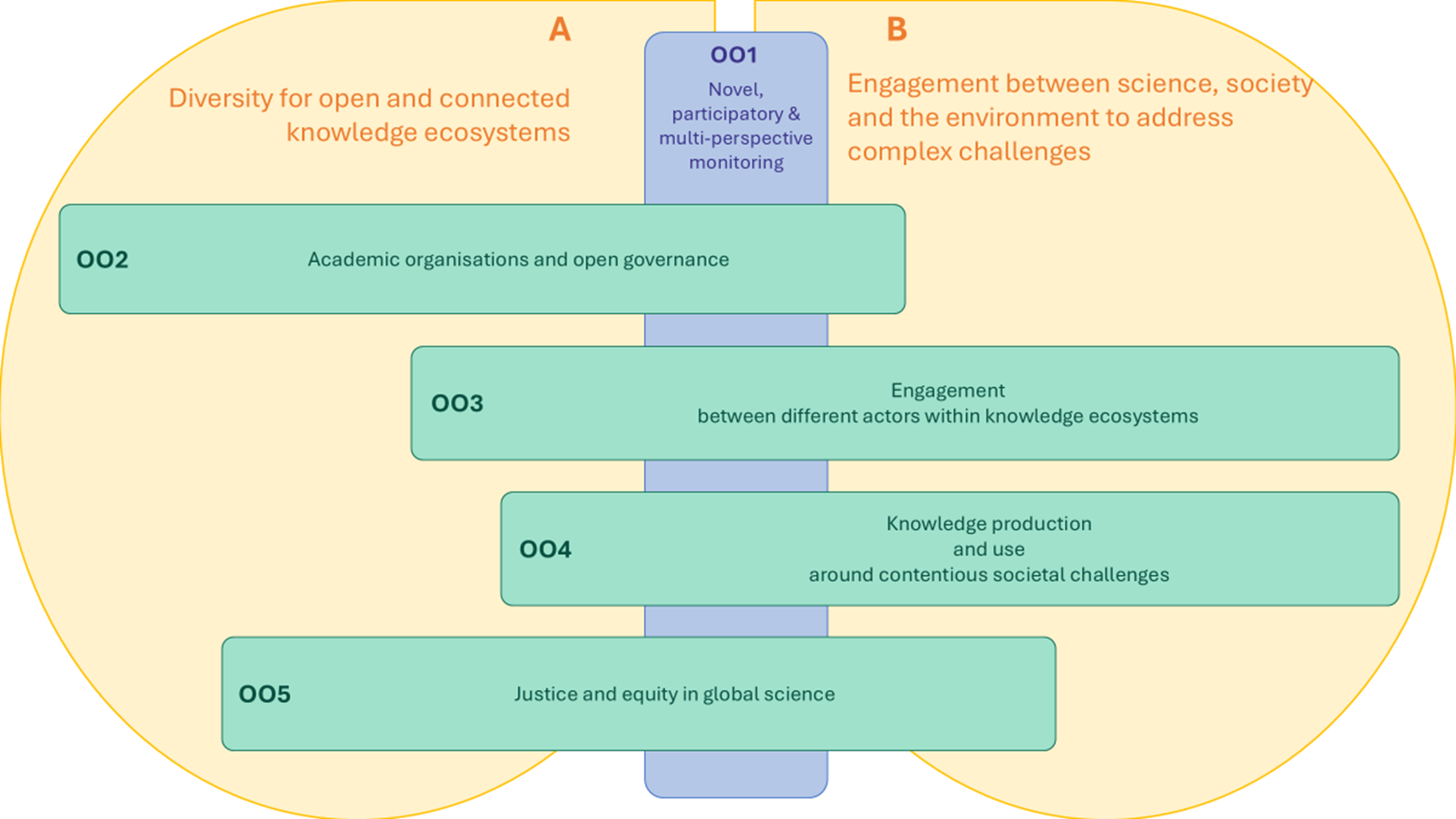
Figure 1. General outline of Strategic Objectives and Operational Objectives for Focal Area Engagement & Inclusion
Our first operational objective focuses on developing more participatory and multi-perspective approaches, with initiatives such as the Multiversatory opening up new ways of studying and monitoring knowledge systems. It also supports our efforts in other operational objectives.
Academic organisations are shaped by embedded values and institutional structures that influence who participates, whose contributions and what kinds of contributions are recognized, and how decisions are made. Our second operational objective examines this, and how governance structures and reform movements such as Reward and Recognition, affect transparency and inclusion in academic decision making.
Various actors connect to and collaborate with science. Our third operational objective looks at the interaction between these actors, as these relationships are central to strengthening the engagement.
In contested areas such as climate change, scientific knowledge becomes intertwined with broader societal debates. Our fourth operational objective explores science in settings of societal contention, touching on issues of trust, polarisation, and public discourse.
Finally, knowledge systems are profoundly shaped by global inequalities. Our last operational objective focuses on how these influence participation in science and how more equitable collaboration can be supported, with science diplomacy as a key lens on the interaction between science and global governance.
What comes next?
Our strategy is intended as a dynamic framework that evolves alongside the emerging topics and challenges shaping our work. Rather than a fixed roadmap, it remains responsive to new insights, perspectives, and collaborations. At the same time, the strategy is intended to foster a growing community that strengthens connections across focal areas within CWTS and beyond.
If you would like to collaborate with us towards this vision, we invite you to explore the strategic plan in more detail and get in touch with the focal area coordinators. Together, we aim to further develop a diverse and engaged community working towards more inclusive and open knowledge systems.
Header picture by John Schaidler on Unsplash.
DOI: 10.59350/jppqh-xxh56 (export/download/cite this blog post)




0 Comments
Add a comment